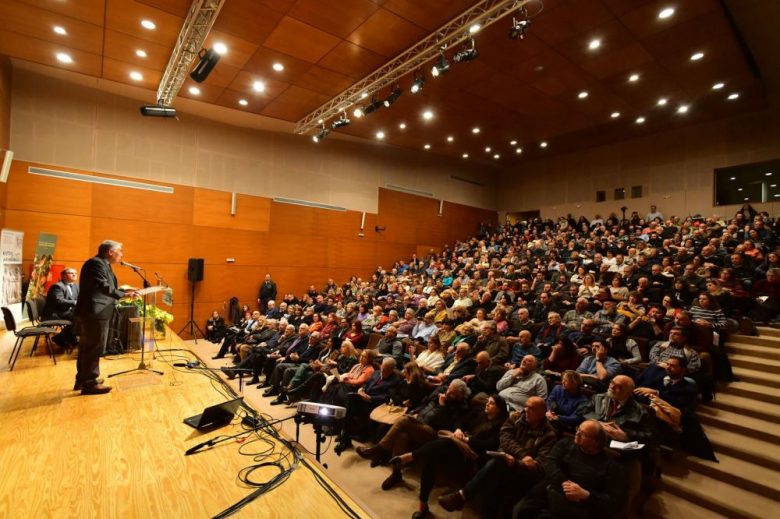
On the 8th and 9th of February the 10th Symposium of Epicurian Philosophy took place in Gargitos, Athens, the place of origin of the great philosopher. The circumstances evolved so that I had the pleasure and the luck to attend it. With time approaching I noticed how extremely enthusiastic I was getting about it.
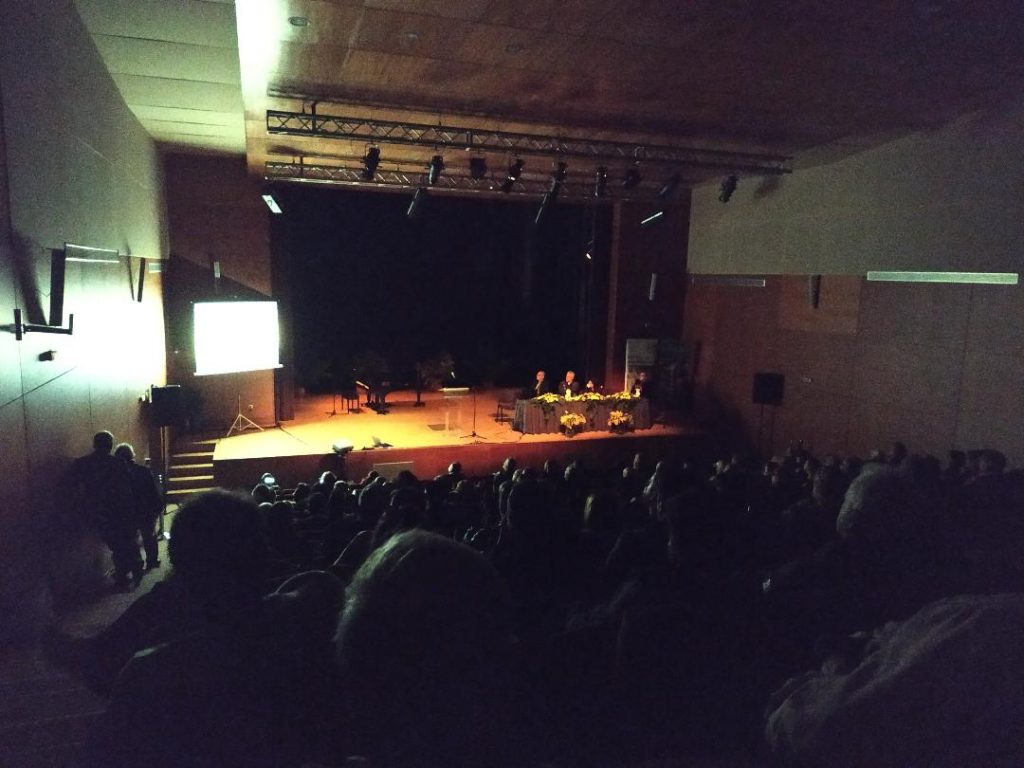
Having no previous experience of any philosophy-related symposiums, I didn’t really know what to expect about the organisation, about the people who would attend it or even the content of it. The first day of the symposium left me immensely positively surprised. The conference hall was so packed that people were sitting on the stairs. People of all ages had joined, more youth than I expected but of course the average would be around 50 years old with a rough estimation.
The speakers were from all kind of areas, acclaimed professors from Greek or foreign universities, members of the Gardens around Greece and many others aspiring Epicurean friends. Impressed left me also the greetings sent online from the Epicurean Garden of Sydney!
Throughout the evening the talks were engaging many topics, all of which had their basis on the teachings of Epicurus. Since the philosophy of Epicurus has not been proved wrong up to today the focus was on its practice in our everyday life.
Epicurus saw the most pleasurable life as the one we avid pleasures. Psychologists for example, interpreted this hedonistic theory of Epicurus in terms of the physiology of the brain. Scientifically explained, in the brain there is the system which regulates the punishment and also the pleasure we feel coming from our actions. The relation of stress and lack of pleasure with socio-economical factors was presented. Nutritionists explained their strategies which are basically in line with the the moving and static concept of pleasures of Epicurus.
For Epicurus, us grasping our environment plays a part in our happiness so the contest to explain the physical phenomena could not be neglected from how bibliography evolved. Astronomers took turn on the podium to portray the infinite universe. Connecting the knowledge we have for the cosmos with the philosophy of Epicurus makes us indeed not to fear the unknown. Knowing the swerve of the atom and the implied randomness of the creation of the cosmos, expels the fear of any gods ruling the world or of any mythical creatures rendering in the corners. Life counts now and ataraxia is easier attained. A dive similar to an oceanic feeling.
These were only some of the intriguing speeches with their analogies to everyday experience that were given during the symposium.
Epicurus emerged during unstable times of ancient Greece, when Alexander the Great had died and the structure of the world was changing. The citizens framework was being shifted to a wider one, that of the inhabitant of the word. No leader existed to unite and to relieve the crowds.
During that time, Epicurus gave the remedy to the man of his time to escape all the insecurities the era had put upon him. Regardless the situation, regardless of social status, sex or race, Epicurus was the one that made happiness possible for everyone.
According to Epicurus, a happy life equals the absence of the soul’s anxiety and body’s suffering, putting pleasure as the chief good.
Static pleasures were the pleasures that were able to gift a permanent state of happiness, excluding thus unnecessary desires that would only add the stress of wanting and craving for more.
Philosophy as such, was not seen for Epicurus as an end in itself, but as a means to an end. Knowledge was to aid humans in their path to happiness. Learning and enjoyment in philosophy are to happen at the same time.
The great teacher believed in Gods, but he realised that by being Gods they cannot have any human attributes. For this reason they would never interfere with any human. This unprecedented theory was in state to make any fear of punishment, guilt and expected reward from Gods unreasonable.
Another support Epicurus provided to his people, was that Death was not relevant to the living ones. When death existed, they didn’t so its threat was not applicable any more.
The followers of Epicurus were accumulating in his schools, called the gardens, which were build on Friendship. Small communities were leading a self-sufficient life surrounded by friends. The possession of friendship was the essential characteristic for building a happy life for Epicureans.
The experience of the symposium was extraordinary and left its footprint on my path. Long felt emotions and thoughts were now connected and satisfied. This reoccurring thought I had since a kid of THE society composed of people coming together and sharing their lives simply in deep friendship seemed now that it was not a dream. A sweat and glorious memory was coming from the past.
These hours spend there and my internal momentum made me think thus how Epicurian philosophy seems to become more and more relevant in our agitated times as well. In times where lives are enslaved in a fast running loop and where social opinions are shaping our happiness. Epicurus mind and lifestyle seems to be a strong weapon against any financial, social, race, etc battlefields. Seems like when u are in line with nature, fearless of dogmas and sharing life with friends, enjoying simply the small things in life, no virus can penetrate your mind.
Sharing a life in a society of no dogmas but deep rooted in friendship. This is all it is.
Well, at least until now, somebody would say.
When Epicurus gardens welcoming its people was still an option.
Where friends were allowed to laugh together and drink from the same glass of life.
Seems now though, as if his fervent opposers and haters have gone next level.
How would Epicurus and the gardens react now…?
A., from the quarantine